
-
February 8, 2024
Aluminium Formwork vs Modular Formwork: Which Should You Choose for Your Project?
When it comes to system formwork, two options come up in almost every conversation: aluminium formwork and modular formwork. Both are far superior to traditional timber shuttering. Both deliver faster construction and better concrete quality. But they are not interchangeable, and choosing the wrong one for your project can affect your costs, your cycle times, and your overall outcome.
This guide breaks down the differences clearly so you can make the right call.
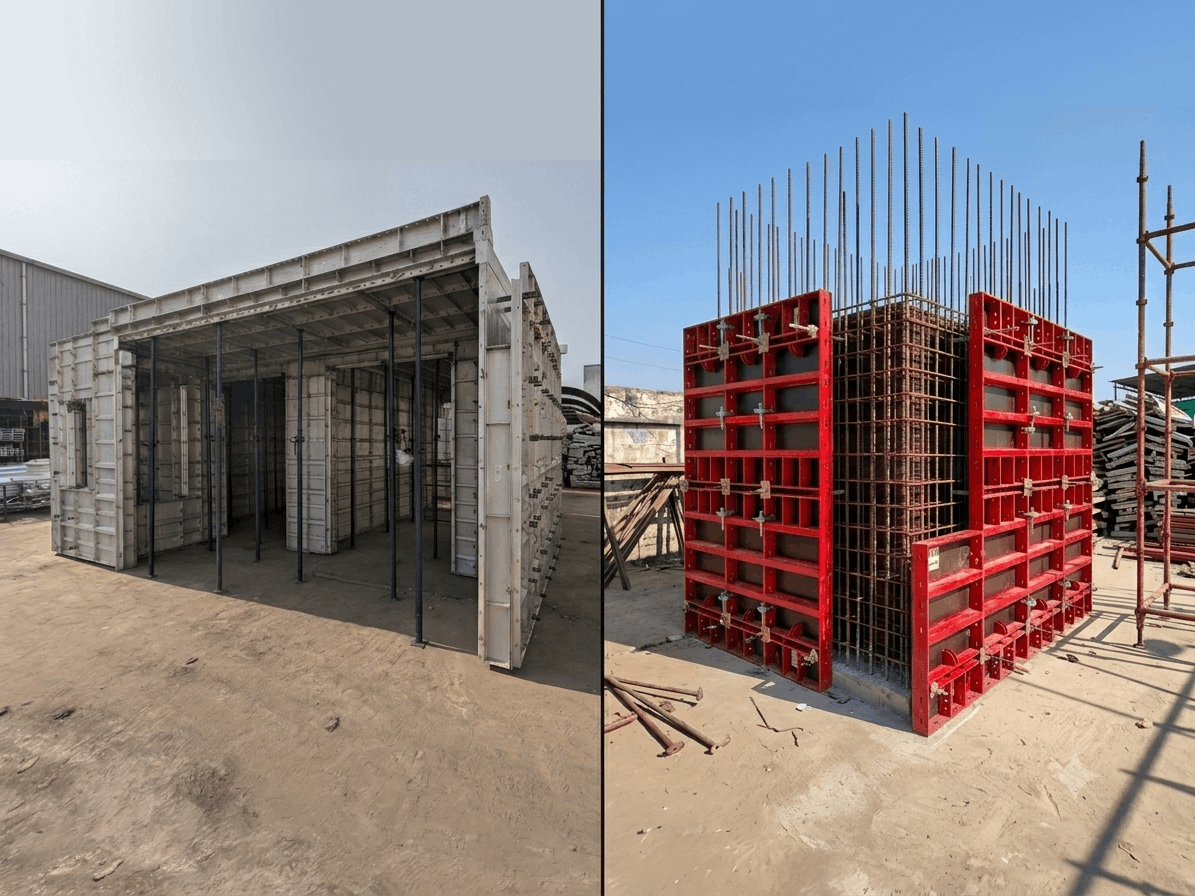
Aluminium formwork is a complete system of aluminium alloy panels, props, and accessories designed for casting concrete walls, slabs, columns, and staircases simultaneously. The entire system is engineered for a specific building layout, which means the panels are cut and configured precisely for your floor plan.
It is the formwork system of choice for large-scale residential construction, particularly housing projects where the same floor layout repeats across multiple levels.
Modular formwork uses standardised, pre-engineered panels that can be combined and reconfigured in multiple ways to suit different structural elements. Unlike aluminium formwork, it is not custom-cut to a specific layout. Instead, panels of standard sizes are arranged and connected to form the required shape.
This makes modular formwork significantly more flexible and better suited to projects where structural geometry changes between floors, buildings, or projects.
Repetition Value
Aluminium formwork wins on repetition value. A single set can last 250 or more pours, making the per-pour cost very competitive on large projects. Modular formwork is also highly reusable but tends to have a wider variety of components, some of which see more wear than others.
Adaptability
Modular formwork is the more flexible system. It can be reconfigured for different structural shapes, floor plans, and building types without needing new panels to be fabricated. Aluminium formwork is engineered for a specific layout, which means it is less adaptable if your project requirements change.
Speed of Construction
Both systems are fast, but aluminium formwork has an edge on cycle time for repetitive residential construction. Because the entire floor is cast in one shot, walls and slabs together, stripping is quick and consistent. Modular formwork setup takes more planning per pour but is still far faster than timber shuttering.
Concrete Surface Finish
Aluminium formwork typically delivers a smoother, more consistent surface finish than modular formwork. On many projects, this reduces or eliminates the need for plastering, which is a significant cost and time saving.
Initial Investment
Aluminium formwork generally requires a higher initial investment because the system is custom-designed for your building. Modular formwork has a lower barrier to entry and can be sourced more easily in refurbished condition.
Here is a straightforward way to think about it:
Choose aluminium formwork if your project is a residential or housing development with repeating floor layouts, if you are building multiple floors and speed matters, or if you want to maximise your per-floor cost efficiency over a large number of pours.
Choose modular formwork if your project has varied structural geometry, if you are working across different building types, if flexibility and reconfigurability matter more than raw repetition speed, or if you are building a general formwork inventory that will serve multiple different project types.
If cost is the primary concern, refurbished versions of both systems are available from Formbid at 30 to 40 percent less than buying new. Many contractors use refurbished aluminium formwork for their first large housing project and then reinvest in new sets as the business grows.
At Formbid, we help contractors work through exactly this kind of decision every day. Share your project details with our team and we will give you an honest recommendation based on what your specific project needs. No pressure, just the right answer.